

You're sitting in the dental chair, and after a quick examination, your dentist mentions that a tooth needs repair. Your mind likely starts racing with questions about what comes next. Is this a simple fix, or will it require something more involved? Choosing between a dental crown vs filling is a common crossroad for many patients, and it's natural to feel a bit of uncertainty about which path is best for your smile and your budget.
We understand that dental terminology can feel overwhelming, especially when you're worried about the comfort or cost of a procedure. You want a solution that looks natural and lasts for years without unnecessary time in the chair. High-quality providers like Dental Scotland emphasize this patient-first approach by offering comprehensive restorative options that focus on long-term health. This guide will help you discover the key differences between these two restorations so you can make an informed, confident choice for your oral health. We'll look at the specific scenarios where a filling is the perfect fit, when a crown offers the best long-term value, and how modern materials help preserve your tooth's foundation. By the end, you'll have a clear understanding of how we work together to keep your smile healthy and functional.
Key Takeaways
- Learn how restorative dentistry can return both function and a natural appearance to your smile after tooth damage.
- Understand the critical differences between a dental crown vs filling regarding durability, materials, and long-term investment.
- Discover the clinical "rule of thumb" used to determine if a tooth has enough healthy enamel to support a filling or requires a crown.
- Find out how a gentle, patient-centered approach to care ensures your comfort during restorative procedures in Maryville.
- Gain insights into the essential maintenance habits that will help protect your restoration and extend its lifespan.
Dental Crown vs. Filling: Understanding the Restorative Basics
Restorative dentistry aims to return both function and aesthetics to a damaged tooth, ensuring you can eat, speak, and smile with confidence. Whether you're dealing with a small cavity or a significant fracture, the primary goal is always to save the natural tooth whenever possible. A Dental restoration serves as a vital tool in this process, offering different levels of support based on your specific needs. Both fillings and crowns are essential instruments for tooth preservation that prevent further decay and maintain your oral health. Our focus is on providing a gentle repair that feels as natural as it looks.
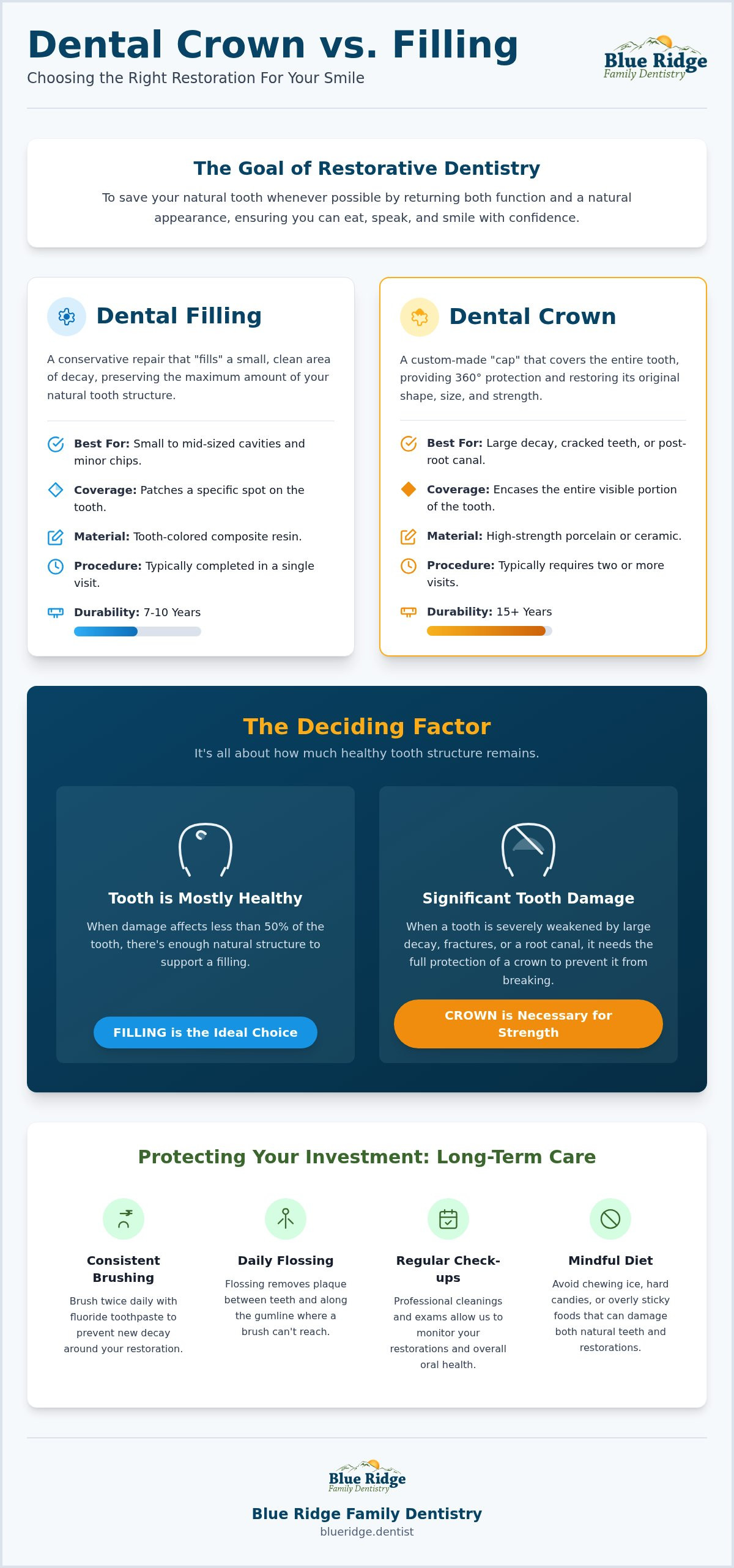
Deciding on a dental crown vs filling is a collaborative process between you and your dentist. We look at the structural integrity of the enamel and how much support the tooth needs to withstand daily biting forces. A filling is a conservative repair used for minor decay or small chips, while a crown is a custom-fitted cap that covers the entire visible portion of the tooth.
What Is a Dental Filling?
Dentists use fillings primarily for treating small to mid-sized cavities before they can grow into larger problems. During the procedure, your dentist removes the decayed portion of the enamel and cleans the area thoroughly to ensure no bacteria remains. We then fill the space with a durable composite resin. This material is popular because it bonds directly to the tooth and can be shaded to match your surrounding enamel perfectly.
Fillings are highly efficient because they are typically completed in a single visit. This approach preserves the maximum amount of your natural tooth structure, making it the most conservative option available. It's a quick way to stop decay in its tracks and restore the smooth, functional surface of your tooth.
What Is a Dental Crown?
Sometimes a tooth is too weak to support a standard filling. This often happens if the decay is extensive or if the tooth has already suffered a fracture that threatens its foundation. In these cases, a crown becomes the recommended solution. A crown provides 360-degree protection, encasing the tooth entirely to prevent it from fracturing under the pressure of chewing.
This restoration is ideal for several specific situations:
- Teeth with large existing fillings that are starting to fail or leak.
- Teeth that have undergone root canal therapy and require extra reinforcement to remain stable.
- Severe wear or deep cracks that compromise the structural integrity of the tooth.
Because a crown is custom-fitted to your unique bite, it restores the tooth's shape and size while providing a long-term barrier against future damage. While a filling patches a specific spot, a crown reinforces the entire structure. This comprehensive approach ensures your tooth remains a stable part of your smile for years to come.
Comparing the Two: Durability, Materials, and Investment
When you're deciding on a dental crown vs filling, it's helpful to think about the long-term journey of your tooth. While we always aim for the most conservative repair possible, we also want to ensure your smile remains stable for years to come. The choice often comes down to a balance between the immediate restorative needs and the long-term durability of the material. At Blue Ridge Family Dentistry, we help you weigh these factors so you can choose a solution that fits your lifestyle and your health goals.
Materials and Aesthetics
Modern dentistry has moved away from noticeable metal repairs in favor of materials that look and feel like natural enamel. For smaller repairs, we use composite resin fillings. This material is a mixture of plastic and glass that we match to your tooth's specific shade. It bonds directly to the tooth, which helps support the remaining structure while staying virtually invisible to others.
For more extensive damage, porcelain and ceramic crowns offer superior translucency and stain resistance. These materials mimic the way light passes through natural teeth, ensuring your restoration doesn't stand out. Because crowns are crafted to fit your unique bite, they feel natural from the moment they're placed. If you're curious about how these restorations are created, the dental crown procedure involves taking precise impressions to ensure a perfect, comfortable fit.
Long-Term Value and Durability
The durability of your restoration is a key part of the investment. Fillings are highly cost-effective and perfect for minor issues, but they generally have a shorter lifespan. According to industry research, composite fillings typically last between 7 and 10 years before they may need replacement. Over time, the edges of a filling can begin to "leak," which might allow bacteria to seep underneath and cause recurrent decay. If a filling is replaced multiple times, the hole naturally gets larger, which may eventually require a more significant restoration.
Crowns require a larger upfront investment but often provide better long-term value. A well-maintained porcelain crown can last 15 years or longer. They are especially beneficial for molars, which handle the heavy chewing forces of your back teeth. By providing 360-degree protection, a crown prevents the tooth from splitting or fracturing under pressure. When choosing between these options, it's wise to consider the "lifetime cost" of the tooth. Investing in a crown now might prevent the need for more complex procedures, such as root canals or extractions, in the future. If you have questions about which path offers the best protection for your smile, we invite you to speak with our compassionate team in Maryville to discuss your restorative options.
When a Filling Isn't Enough: Criteria for a Dental Crown
Choosing between a dental crown vs filling isn't just about the size of a cavity; it's about the long-term stability of your natural tooth. Our team uses specific clinical criteria to determine which restoration will best serve your oral health. If we only patch a tooth that lacks a solid foundation, we risk future fractures that could lead to more invasive treatments. We want your repair to be a permanent solution, not a temporary fix that leads to more chair time later.
A common "rule of thumb" in restorative dentistry involves the amount of healthy enamel remaining. Generally, if more than 50% of the tooth structure is compromised by decay or old, large restorations, a filling is no longer a viable option. Think of it this way: a filling is a material that relies on the surrounding enamel walls for support. If those walls are thin or missing, the filling has nothing to hold onto. A crown, however, creates its own walls by encircling the entire tooth structure.
While a filling relies on the strength of your existing tooth, a crown acts as a protective shield that prevents a weakened tooth from splitting under the daily pressure of chewing.
Assessing Structural Integrity
We often encounter "cracked tooth syndrome," where a tooth looks healthy on the surface but has deep, microscopic fractures. In these cases, placing a filling can actually worsen the problem by acting like a wedge that drives the crack deeper. A crown holds the tooth together, providing the reinforcement needed to stop the crack from spreading. During a dental exam Maryville TN, we use specialized tools and imaging to identify these structural weaknesses before they become painful emergencies. Early detection allows us to choose the most conservative crown option to preserve your smile.
The Role of Root Canal Therapy
Teeth that have undergone root canal therapy almost always require the protection of a crown. When the pulp and blood supply are removed to treat an infection, the tooth naturally becomes more brittle over time. Without a crown to seal and strengthen it, the tooth is highly susceptible to breaking even during normal meals. This synergy between restorative and endodontic care is essential for saving your natural teeth. By completely encasing the tooth, a crown prevents future infections and ensures your smile remains functional and pain-free for years to come.
What to Expect During Your Treatment in Maryville
Many of our patients tell us that the hardest part of dental work is the anticipation of the procedure itself. At Blue Ridge Family Dentistry, we believe that clear communication is the best way to lower the barrier of anxiety often associated with clinical environments. Whether your treatment plan involves a dental crown vs filling, we walk you through every step before we begin. This transparency helps our Maryville and Alcoa neighbors feel like partners in their own oral health journey. Our goal is to provide a stress-free environment where you feel heard and cared for from the moment you walk through our doors.
We use modern numbing techniques and a gentle touch to ensure every procedure is manageable. We don't just treat teeth; we treat the people behind the smiles. By prioritizing your comfort, we aim to be a stable and caring fixture in your healthcare routine. You'll find that our team is dedicated to providing a high level of professional care that remains sophisticated yet neighborly.
The Gentle Filling Process
The filling process is a straightforward, single-visit restoration designed to stop decay in its tracks. We start by applying a local anesthetic to ensure you don't feel any discomfort during the procedure. Once the area is fully numb, our dentists use a gentle touch to remove the decayed portion of the enamel and clean the tooth thoroughly. Next, we apply the tooth-colored composite resin in thin layers. Each layer is cured with a specialized light, bonding the material directly to your tooth for a secure fit. We finish by shaping and polishing the restoration so it matches your bite and looks like a natural part of your smile.
The Dental Crown Journey
The journey toward a permanent crown typically requires two visits to our office. During the first appointment, we carefully shape the tooth to create a stable foundation that allows the crown to fit securely. We then take precise impressions, either digitally or with a physical mold, to ensure your custom-fitted cap matches the unique contours of your smile. While a specialized lab crafts your permanent dental crowns Maryville TN, we provide a temporary crown. This temporary piece protects the prepared tooth and maintains your comfort until your final restoration is ready for placement. At the second visit, we bond the permanent crown into place, restoring full function to your tooth.
Our team is here to guide you through every facet of your restorative care with compassion and expertise. If you have been delaying dental work due to worry, we invite you to schedule a comfortable consultation with our Maryville dentists to discuss your options in a relaxed, welcoming setting.
Protecting Your Investment: Long-Term Smile Maintenance
Completing your treatment is a significant step toward a healthier life, but the work doesn't end when you leave the dental chair. Whether you've chosen a dental crown vs filling, your new restoration requires ongoing attention to remain functional and beautiful. Restorations are not "set it and forget it" solutions; they require consistent care to reach their full potential. We view oral health as a lifelong partnership between you and our clinical team. While modern materials are incredibly durable, they still rely on the health of the underlying tooth and surrounding gums to stay in place.
Professional cleanings are more than just a way to keep your smile bright. During these visits, we carefully examine the margins of your restorations. These are the specific areas where the porcelain or composite meets your natural enamel. If these edges begin to show signs of wear or leakage, we can often address the issue before it leads to a new cavity. Maintaining a regular schedule for exams is the best way to ensure your investment lasts for its intended lifespan.
Daily Habits for Restored Teeth
Your daily routine is the first line of defense for your dental work. Brushing and flossing remain essential, but you should pay special attention to the gum line. This area is the most critical for crowns because it's where bacteria can gather and potentially cause decay under the restoration. Keeping the gums healthy ensures the seal of your crown or filling remains intact. When you are deciding on a dental crown vs filling, remember that both options represent a commitment to your future health.
Mechanical stress can also take a toll on dental work. We recommend avoiding "tooth-cracking" habits like chewing on ice, hard candy, or non-food objects like pens. If you struggle with bruxism, or teeth grinding, a custom nightguard is a wise addition to your routine. Grinding can put immense pressure on a restoration, leading to premature wear or even fractures. Protecting your teeth while you sleep is a simple way to extend the life of your restorative work and prevent the need for additional repairs.
Your Next Step at Blue Ridge Family Dentistry
We invite you to experience restorative care that feels like visiting a trusted friend. Our team is dedicated to helping you decide which treatment fits your unique health goals and your budget. We believe in providing clear, honest information so you can feel confident in every decision you make for your smile. If you're ready to restore your confidence and return function to your teeth, our Maryville practice is here to guide you. Schedule your consultation today to see how a gentle, personalized approach can make all the difference in your dental experience.
Restoring Your Smile with Confidence and Care
Choosing the right restoration doesn't have to be a source of stress. Whether you need a conservative filling for a small cavity or the 360-degree protection of a crown, the goal is always to preserve your natural tooth and maintain your comfort. Understanding the differences in a dental crown vs filling helps you prioritize your long-term oral health over quick fixes. By focusing on structural integrity and durability, you can ensure your smile remains functional and natural for years to come.
At Blue Ridge Family Dentistry, our team of four experienced dentists is dedicated to providing compassionate, community-focused care right here in Maryville. We specialize in restorative and cosmetic solutions that lower the barrier of anxiety often associated with the dental environment. We're here to be your stable guide, offering personalized advice that fits both your health goals and your budget. Ready to take the next step? Schedule your restorative consultation at Blue Ridge Family Dentistry today! We look forward to helping you achieve a pain-free, healthy smile that you'll be proud to share with your neighbors.
Frequently Asked Questions
Is it painful to get a dental crown compared to a filling?
Both procedures are designed to be completely comfortable for our patients. We use local numbing techniques to ensure you don't feel pain during either a dental crown vs filling. While a crown appointment takes a bit longer because it involves more tooth preparation, our gentle approach remains the same. You might feel some mild sensitivity or gum tenderness for a day or two afterward, but this is easily managed with standard over-the-counter care.
How much more expensive is a crown than a filling?
A crown requires a higher investment because it involves custom lab fabrication and high-grade materials like porcelain. Fillings are smaller, direct repairs completed in one visit, which makes them more budget-friendly initially. However, we always encourage patients to look at the long-term value. A crown often prevents the need for more costly procedures, such as root canals or extractions, by providing 360-degree protection for a weakened tooth foundation.
Can a filling be replaced with a crown later on?
Yes, replacing an old filling with a crown is a very common restorative step in our Maryville office. Over time, large fillings can develop leaks or cause the surrounding tooth structure to crack under pressure. When a filling no longer provides enough support, we recommend transitioning to a crown to encase the tooth. This provides the structural reinforcement needed to prevent a full fracture and keep your natural tooth stable for many more years.
What happens if I choose a filling when my dentist recommends a crown?
Choosing a filling for a tooth that truly needs a crown significantly increases the risk of the tooth splitting. If a tooth fractures deeply, it may become impossible to save, eventually leading to a necessary extraction. While a filling might seem like a simpler fix today, it cannot provide the 360-degree bracing a crown offers. We prioritize your long-term health by recommending the option that offers the best foundation for your smile.
How long do I have to wait to eat after getting a crown or filling?
You should wait until the local anesthetic has completely worn off before eating to avoid accidentally biting your cheek or tongue. For composite fillings, the material is fully cured before you leave, so you can eat immediately once the numbness fades. If you have a temporary crown, avoid sticky or very hard foods that could dislodge it. Once your permanent porcelain crown is bonded, you can return to your normal diet.
Do dental crowns look different from my natural teeth?
Modern crowns are designed to blend seamlessly with your surrounding teeth. We use high-quality porcelain and ceramic materials that mimic the translucency and light-reflecting properties of natural enamel. During your visit, we carefully match the shade of your crown to your existing smile. Most people won't be able to tell the difference between your restoration and your natural teeth, giving you a result that is both functional and beautiful. This level of artistry is a hallmark of a skilled cosmetic dentist Highlands Ranch and ensures a truly natural look.
Will my dental insurance cover the cost of a crown?
Most dental insurance plans provide coverage for crowns when they are medically necessary to restore a damaged tooth. While every plan is unique, many policies cover approximately 50% of the cost after your deductible is met. Our team is happy to help you navigate your specific benefits and provide a clear estimate of your out-of-pocket costs. We focus on transparency so you can make confident decisions about your restorative care.
Can a crown get a cavity?
While the porcelain material of a crown cannot decay, the natural tooth structure underneath is still susceptible to cavities. Decay typically starts at the margin, which is where the crown meets your gum line. This is why consistent brushing, flossing, and professional cleanings are essential. Protecting the foundation of your dental crown vs filling ensures the restoration stays secure and your mouth remains healthy for the long term.


