

What if that sharp zing you feel when sipping cold water isn't a sign of a major dental disaster, but actually your tooth's way of asking for a simple, quick fix? Many of our neighbors in Maryville find themselves lying awake at night wondering if their current tooth pain means a root canal or a filling is the only solution. It's natural to feel a sense of worry when a dull ache or sudden sensitivity starts to interfere with your day. You want relief, but you also want to know exactly what to expect before you even step into the office.
We understand that dental anxiety often comes from the unknown, and we're here to provide the gentle reassurance you need. In this guide, you'll discover the real differences between these two common restorative treatments and learn how to interpret the signals your body is sending. We'll debunk the most persistent dental myths and explain how modern digital X-rays make diagnosis more accurate and comfortable than ever. By the end, you'll have a clear path toward a healthy, pain-free smile and the confidence to take the next step for your oral health.
Key Takeaways
- Learn to distinguish between the temporary sensitivity of a minor cavity and the persistent, deep-seated ache that signals a serious infection.
- Discover how your Maryville dentist evaluates tooth pain root canal or filling options by measuring the depth of decay with advanced digital X-rays.
- Debunk common dental myths to understand why modern root canal therapy is a restorative, comfort-focused procedure rather than a painful ordeal.
- Identify specific red flags, such as localized gum swelling or lingering sensitivity to heat, that indicate it is time for professional care.
- Explore the gentle reassurance approach that prioritizes conservative treatment and your long-term comfort at Blue Ridge Family Dentistry.
Deciphering Tooth Pain: Is It a Minor Cavity or a Deep Infection?
Understanding why your tooth hurts starts with looking at its internal structure. Your tooth has three main layers: the hard outer enamel, the sensitive dentin, and the soft inner pulp. When you experience tooth pain root canal or filling treatments are the two primary ways we address damage to these layers. Sharp, fleeting pain from cold drinks often indicates a minor issue in the enamel or dentin. While no one likes a toothache, catching decay at this stage is actually a positive sign because it's usually easy to fix. In Maryville, we use high-precision digital X-rays to see exactly what's happening beneath the surface. These images help us determine if the decay is a simple surface problem or a deeper infection that requires more attention.
Defining the Filling: Repairing the Surface
When decay is limited to the outer layers, a basic restorative filling is the standard solution. We use modern composite resins that bond directly to your tooth structure. These materials are designed to match your natural tooth color, making the repair virtually invisible. This procedure is quick and focuses on removing the damaged area while keeping as much of your healthy tooth as possible. By choosing a filling early, you prevent bacteria from traveling deeper toward the nerve. It's the most effective way to protect your smile with a conservative approach that saves you time and prevents future discomfort.
Defining the Root Canal: Saving the Foundation
If bacteria reach the dental pulp, the pain often shifts from a sharp sting to a dull, throbbing ache. This happens because the nerve inside the tooth is under pressure from infection. A Root canal treatment is a specialized procedure where we gently remove the infected pulp to stop the pain and save the tooth's foundation. Many people worry that this process is difficult, but the goal is actually to provide immediate relief and keep your natural tooth in place. Saving your natural tooth is always the best outcome. It helps maintain the strength of your jawbone and keeps your surrounding teeth from shifting out of place. Deciding between a tooth pain root canal or filling requires a professional exam, but knowing these details helps you feel more prepared for your visit.
Busting the Myths: Why Root Canals Aren't the Villain of Dentistry
Deciding whether you need a fix for your tooth pain root canal or filling can feel stressful, especially with so much misinformation circulating. Many patients arrive at our Maryville office with deep-seated fears based on outdated stories. It's time to set the record straight so you can make a choice based on facts, not anxiety. When we understand the "why" behind a procedure, the clinical environment feels much less intimidating.
One of the most common myths is that the procedure itself is agonizing. In reality, modern techniques and effective local anesthetics make the experience no more uncomfortable than getting a routine filling. If you're curious about the technical details, you can read more about what happens during a root canal to see how straightforward the process is. Another dangerous misconception is that if the pain suddenly disappears, the problem has solved itself. Usually, this just means the nerve has died, while the infection continues to spread silently toward your jawbone. Modern medicine has also thoroughly debunked the old claim that root canals cause other illnesses; saving your tooth is actually a proactive step for your total body health.
The Truth About Root Canal Comfort
We prioritize your peace of mind from the moment you sit in the chair. Our team uses precise digital imaging to plan every step, ensuring the treatment is as conservative as possible. Local anesthetics completely numb the area, so you won't feel anything while we work to remove the source of your discomfort. We view this procedure as a way to provide immediate relief, helping you return to your daily life without a throbbing toothache holding you back. Most patients are surprised by how routine the visit feels.
Why Extraction is Rarely the Better Option
It might seem simpler to just pull the tooth and be done with it. However, extraction is often the more complicated and expensive path in the long run. When you lose a natural tooth, the surrounding bone begins to weaken, and other teeth may shift out of place. Research shows that root-canaled teeth have a 10-year survival rate of 93-97% when properly restored with a high-quality crown. Keeping your natural tooth preserves your facial structure and your ability to chew comfortably. If you're feeling uncertain about your symptoms, our compassionate team in Maryville is here to help you explore the most gentle path forward.
Filling vs. Root Canal: 5 Factors Your Maryville Dentist Evaluates
When you visit us with a toothache, we don't just look at the surface. We evaluate five specific factors to determine if your tooth pain root canal or filling treatment is the right path forward. Our goal is always to be as conservative as possible while ensuring the long-term health of your smile. We use digital X-rays to see exactly how close a cavity is to the nerve. If there is a thick layer of healthy dentin left, a filling is often sufficient. However, if the decay has reached the inner chambers, we must look deeper.
Beyond the X-rays, we look for physical signs of infection. This includes identifying abscesses, which often appear as small, pimple-like bumps on the gum line. We also assess the structural integrity of the tooth. A tooth needs enough healthy enamel and dentin to support a filling without fracturing under the pressure of chewing. Finally, we consider the health of the dental pulp and your personal history. Every smile is unique, and we want to ensure your treatment aligns with your long-term oral health goals.
Ensuring your dental treatment supports your long-term goals often includes considering how your teeth and jaw contribute to your overall appearance. For those interested in enhancing their facial profile alongside their dental care, Dr. Aaron Fletcher, MD offers expert consultation on procedures like chin augmentation to help achieve a balanced and harmonious look.
The 'Reversible Pulpitis' Turning Point
Reversible pulpitis is a critical turning point in dental care. It means the nerve inside your tooth is irritated but still capable of healing itself. You might feel a quick flash of pain with cold water that disappears almost immediately. In these cases, we often use a deep filling paired with a sedative liner. This medicated layer protects the nerve and encourages it to settle down, acting as a barrier against further irritation. It's a proactive way to avoid more invasive procedures while keeping your natural tooth healthy and intact.
Signs of Irreversible Damage
Sometimes, the damage has progressed too far for a simple surface repair. Irreversible pulpitis occurs when the nerve is too damaged to recover, often leading to a persistent infection. You'll know it's time to consider a different approach if you notice these specific red flags:
- Lingering pain: Sensitivity to heat or cold that lasts for several minutes after the trigger is gone.
- Spontaneous pain: A sharp or dull ache that starts for no reason or wakes you up in the middle of the night.
- Discoloration: A tooth that begins to look grey, dark, or yellowish compared to the teeth next to it.
When these symptoms appear, the choice between tooth pain root canal or filling becomes much clearer. While a filling treats the outer layers, a root canal is necessary to remove the damaged tissue and stop the pain at its source. Catching these signs early allows us to provide the most comfortable experience possible.
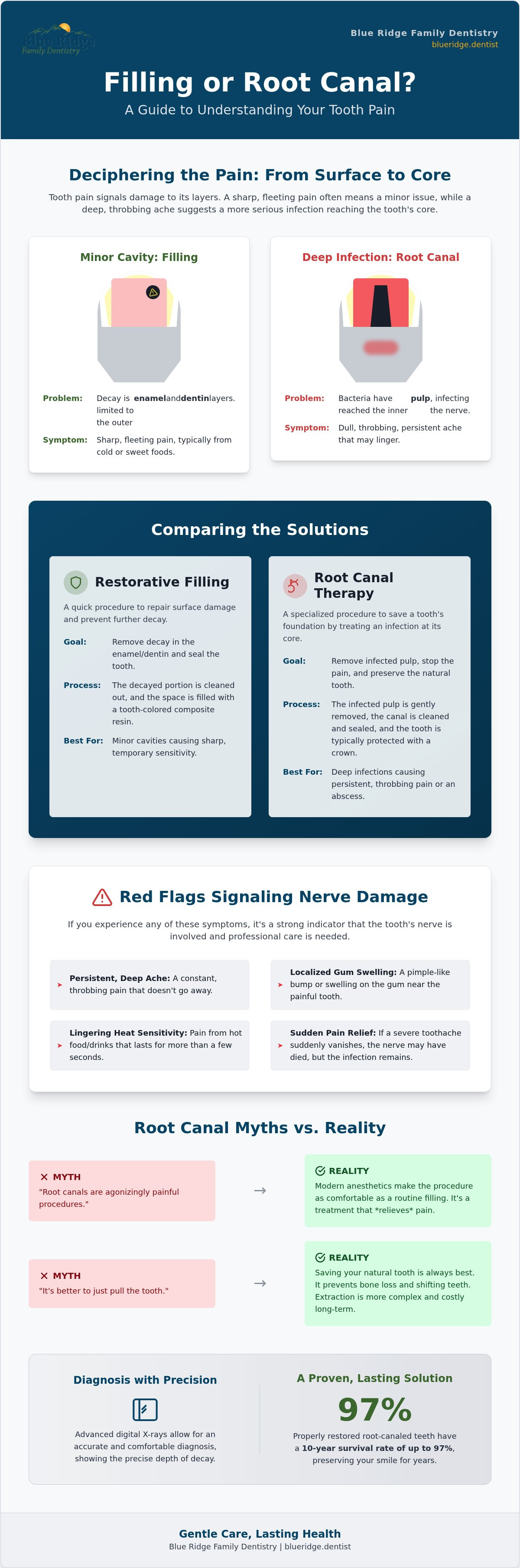
Your Symptom Checklist: Red Flags That Signal Nerve Damage
Taking a moment to assess your symptoms at home can provide a sense of calm during an uncertain time. While a final diagnosis requires a professional exam and digital imaging, your tooth often provides specific clues. Understanding these signals helps you determine if your current tooth pain root canal or filling treatments are likely. We believe that an informed patient is a more relaxed patient, and our team is always here to guide you through these findings with compassion and expertise.
Start by timing your sensitivity. A quick flash of discomfort from a cold beverage often points to a simple cavity that a filling can fix. However, if that sensitivity lingers for thirty seconds or longer after the drink is gone, the nerve may be struggling. Next, check your gum line for any localized swelling or tenderness. A small, persistent bump often signals an infection at the root. You should also consider the sensation of the pain. Is it a sharp, stabbing feeling when you eat something sweet, or is it a dull, heavy ache that won't go away? Sharp pain often relates to the enamel, while a deep throb usually involves the dental pulp. Finally, look in the mirror for physical changes. A tooth that has turned grey or dark yellowish often indicates the internal nerve is no longer healthy. If you feel a sharp zing specifically when applying pressure or biting down, the internal foundation likely needs support.
When to Call for an Urgent Appointment
Some symptoms require more immediate attention to protect your overall well-being. If you develop a fever or notice swelling that spreads toward your jaw or cheek, the infection may be moving beyond the tooth. A persistent, foul taste or salty sensation in the mouth is another sign that an abscess is draining. When pain becomes severe enough to stop you from sleeping or focusing on your day, it's time to seek professional help. We prioritize your comfort and want to address these issues before they become more complex.
Temporary Relief While You Wait for Your Visit
You don't have to suffer in silence while waiting for your scheduled visit. Over-the-counter pain relievers can be very effective when used according to the label's instructions. A warm salt water rinse is a gentle way to reduce local inflammation and keep the area clean. We also recommend sticking to soft foods and avoiding extreme temperatures to prevent triggering the nerve. These simple steps provide a bridge to comfort until we can restore your smile. Taking proactive steps for your comfort helps lower the barrier of anxiety often associated with dental visits.
If you've identified any of these warning signs in your own tooth pain root canal or filling checklist, contact our neighborly team in Maryville to find the relief you deserve.
Restoring Your Smile Comfortably at Blue Ridge Family Dentistry
Choosing a path to resolve your tooth pain root canal or filling concerns doesn't have to be a source of stress. At Blue Ridge Family Dentistry, we've built our practice around a philosophy of gentle reassurance. We know that clinical environments can feel overwhelming, so we prioritize a warm, neighborly atmosphere from the moment you walk through our doors. Our team is here to listen to your concerns and explain your options with clarity and empathy. We believe that comfort is just as important as the technical quality of the care we provide.
We rely on advanced digital X-rays to ensure we only recommend the treatment you truly need. This technology allows us to see the exact extent of decay or infection with incredible precision. By catching issues early, we can often opt for more conservative treatments that preserve your natural tooth structure. If a root canal is necessary, we often recommend dental crowns to provide the strength and protection your tooth needs for the long term. This helps protect your investment in your health and ensures your smile remains functional and beautiful for years to come.
Personalized Care for Maryville and Alcoa Families
We view our patients as more than just appointments; you're our neighbors. Our practice is a stable fixture in the Maryville and Alcoa community, dedicated to building long-term relationships rather than focusing on quick fixes. When you join our dental family, your first visit is designed to be thorough and relaxed. We take the time to learn your history and understand your specific goals for your oral health. We address dental anxiety by maintaining open lines of communication. You'll always know what we're doing and why we're doing it, which helps build a foundation of trust and peace of mind.
As part of our commitment to your total well-being, we recognize that health is holistic; for those in our community seeking relief from musculoskeletal pain or tension, Dr. Horine Chiropractic offers professional care to help you maintain a comfortable and active lifestyle.
Next Steps Toward a Pain-Free Life
Taking the first step toward relief is as simple as scheduling a comprehensive dental exam. During this visit, we'll perform a thorough assessment and discuss the difference between crowns and fillings as they apply to your specific situation. We'll walk you through every detail so you can feel confident in your care plan. Take a deep breath; our compassionate team is here to help you through every part of the process. Whether you're currently navigating tooth pain root canal or filling decisions, we're committed to your comfort and a healthy, lasting smile.
Taking the First Step Toward a Comfortable Smile
Understanding the source of your discomfort is the best way to move past the anxiety often associated with dental work. Whether you're navigating tooth pain root canal or filling decisions, remember that your symptoms are simply a roadmap to the right solution. We've explored how modern digital X-rays provide the accuracy needed for a conservative diagnosis, ensuring we only recommend the treatment that's truly necessary for your health. Our goal is to provide patient-centered restorative care that prioritizes your comfort and long-term well-being.
You don't have to live with the uncertainty of a persistent toothache. Our compassionate Maryville team is here to guide you through every step of the process with gentle reassurance and clinical expertise. We invite you to Schedule Your Gentle Dental Exam in Maryville today. Let's work together to restore your smile's health and give you the peace of mind you deserve. We're ready to welcome you into our dental family and help you get back to enjoying life pain-free.
Frequently Asked Questions
Does a root canal hurt more than a filling?
Modern root canal therapy is designed to relieve pain rather than cause it. With the use of local anesthetics, the sensation during the procedure is very similar to receiving a routine filling. Most patients feel only slight pressure while we work. Our team focuses on your comfort throughout the entire visit to ensure a stress-free and gentle experience.
How do I know if my tooth pain is a cavity or a root canal?
A professional exam is the only way to be certain, but the duration of your discomfort is a major clue. Cavity pain is often sharp and triggered by sweets or cold, disappearing quickly once the trigger is removed. Root canal pain tends to be a deep, spontaneous ache that lingers for minutes or even hours. We use digital X-rays to confirm the best treatment.
Can a tooth that needs a root canal stop hurting on its own?
If a painful tooth suddenly stops hurting, it usually means the internal nerve has died, but the infection remains. Bacteria will continue to multiply and can spread to the surrounding bone or gums even without active pain. This often leads to a painful abscess or localized swelling later on. It's vital to have the tooth checked even if the immediate ache disappears.
What happens if I ignore a tooth that needs a root canal?
Ignoring an infected tooth allows bacteria to spread deeper into your jawbone and potentially your bloodstream. This can lead to systemic health issues, severe swelling, and the eventual loss of the tooth. When you delay treatment for tooth pain root canal or filling needs, the condition can become much more complex. Early intervention helps preserve your natural smile and prevents more serious complications.
How long does a root canal procedure take compared to a filling?
A standard filling usually takes 30 to 60 minutes, while a root canal typically requires 60 to 90 minutes. The extra time is necessary to carefully clean and seal the internal canals of the tooth. Some complex cases might require a second appointment to ensure the infection is completely cleared. We always work efficiently while prioritizing your comfort and the thoroughness of the restoration.
Can a filling eventually turn into a root canal?
Yes, a filling can eventually turn into a root canal if new decay develops underneath the restoration and reaches the pulp. This is why regular checkups are so important for monitoring older dental work. If we catch a leaking filling early, we can often replace it before the nerve becomes involved. Maintaining good oral hygiene at home helps extend the life of your restorative treatments.
Is it cheaper to get a filling or a root canal in the long run?
A filling is more affordable upfront, but saving a natural tooth with a root canal is almost always more cost-effective than an extraction. If a tooth is pulled, you'll eventually need a bridge or a dental implant to prevent your other teeth from shifting. These replacement options are more expensive and time-consuming than preserving your original tooth foundation through restorative care today.
How long is the recovery time after a root canal?
Most patients feel back to normal within a few days, though the area may feel slightly tender for a short period. You can typically return to work or your daily routine the next day. Over-the-counter relievers are usually sufficient to manage any mild discomfort during the healing process. We provide clear aftercare instructions to ensure your recovery is as smooth and quick as possible.


